
From French Fields to James Bond: The Remarkable Story of the 2CV
The 50th anniversary of the Citroën 2CV Spot was celebrated this month at Époqu'Auto 2026 in Lyon. Many of us instantly smile at the sight of this characterful little car, but what is it that continues to inspire such extraordinary affection, almost 80 years after its debut?
For its 2026 edition, Lyon's Époqu'Auto classic-car show chose an unlikely star for its poster. Not an exotic sports car or a luxurious grand tourer, but a cheerful orange-and-white Citroën 2CV.
The occasion was the 50th anniversary of the 2CV Spot, Citroën's first limited-edition model. The exhibition dedicated to the 2CV's colourful special editions provided a fitting tribute to one of France's most recognisable cars.
Few automobiles have played such an important part in the lives of ordinary people. The 2CV was never intended to be glamorous, powerful or prestigious. Yet it became a car that owners grew extraordinarily attached to, creating memories that lasted long after they had stopped driving it.
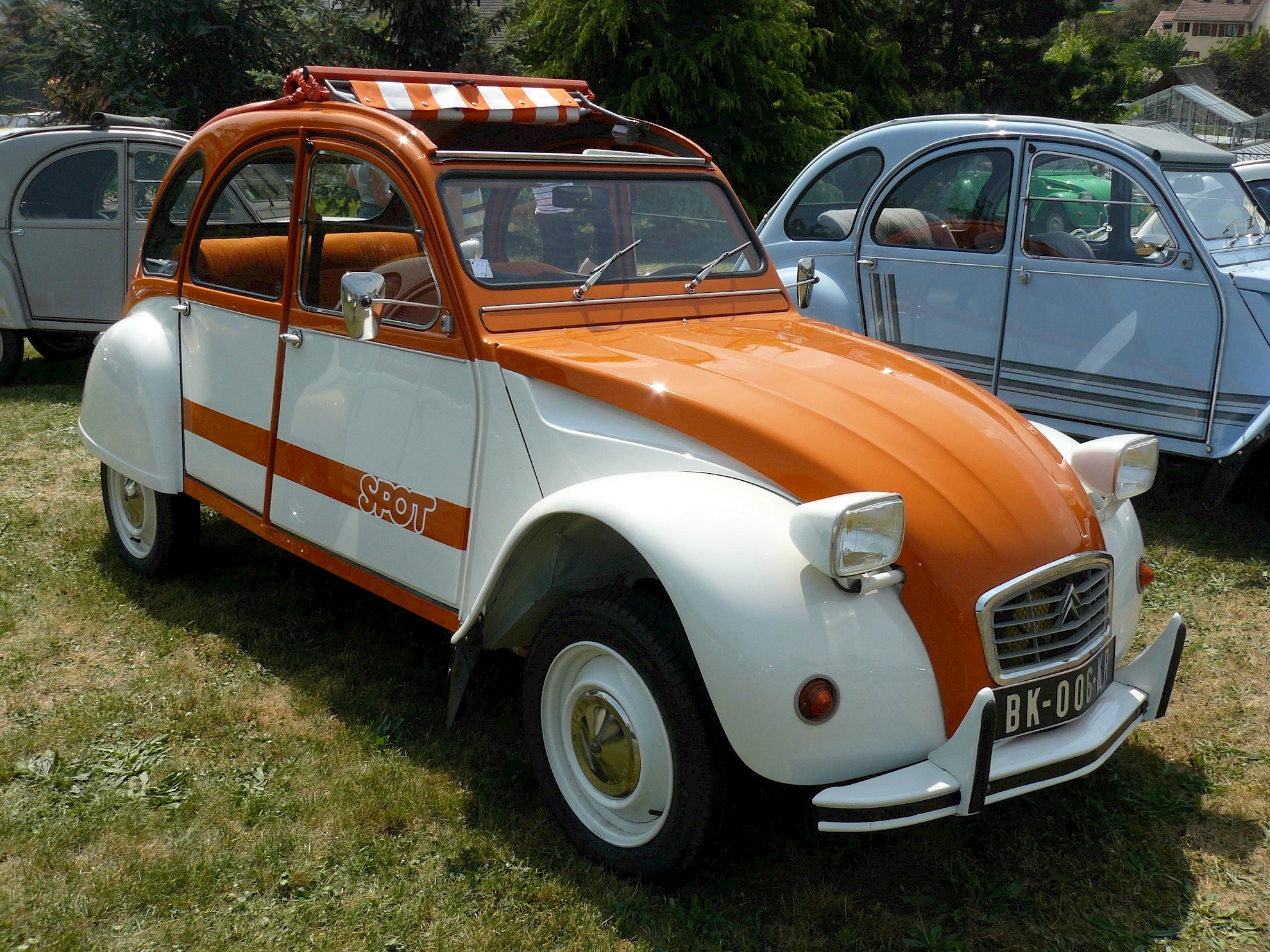
Above: The 1976 Citroën 2CV Spot, instantly recognisable by its Ténéré Orange and Meije White bodywork. Citroën's first limited-edition model celebrates its 50th anniversary in 2026. Photo: Lebubu93 / Wikimedia Commons — CC BY-SA 3.0.

From the fields of rural France
The 2CV's story began in the 1930s, when Pierre-Jules Boulanger, then a senior figure at Citroën, set his engineers an ambitious challenge: to create a practical, economical car that ordinary French families could afford.
France was still largely rural, and many people depended on bicycles, horses or carts for everyday transport. Citroën's proposed Toute Petite Voiture (Very Small Car), or TPV, was designed to change that.
Its engineering was ingenious. The suspension was developed to cope with rough country roads, the seats could be removed to create extra carrying space, and the folding canvas roof made it possible to transport awkward loads.
The famous story that the car should be able to carry a basket of eggs across a ploughed field without breaking them captures the spirit of the design brief.

A design as simple as it is ingenious: the tubular frame and flexible suspension elements of the Citroën 2CV seat, faithfully reproduced in Agora Models' 1:8 scale model. Photo: © Agora Models.
When the finished 2CV was unveiled at the Paris Motor Show on 7 October 1948, its unconventional appearance attracted plenty of criticism. But the public recognised something far more important: an affordable, versatile car that could transform everyday life.
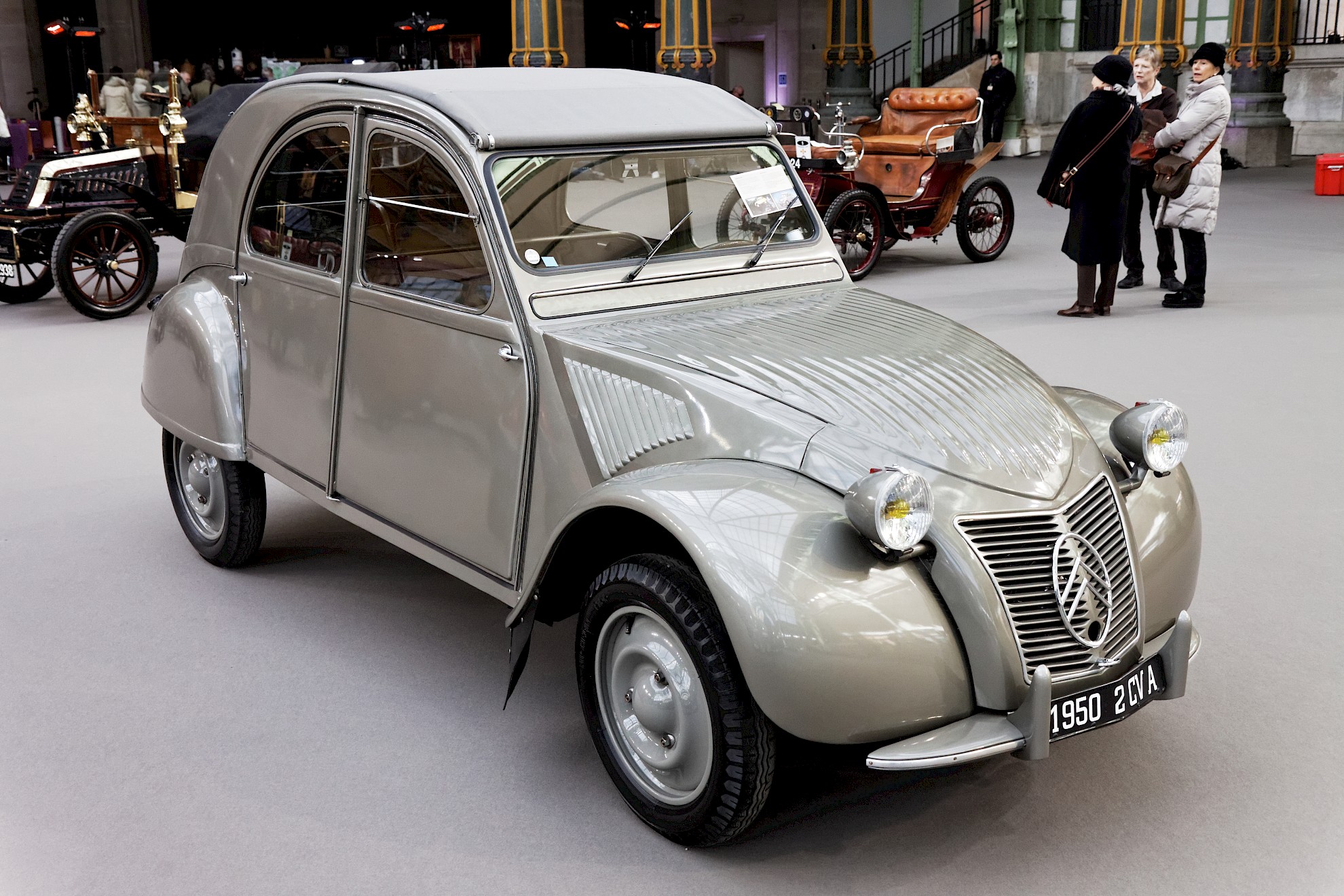
A 1950 Citroën 2CV A, representing the early examples of the famous little Citroën, first unveiled at the Paris Motor Show on 7 October 1948. Photographed in Paris in 2013. Photo: Thesupermat / Wikimedia Commons — CC BY-SA 3.0.

The little Citroën soon became a familiar sight on French roads.
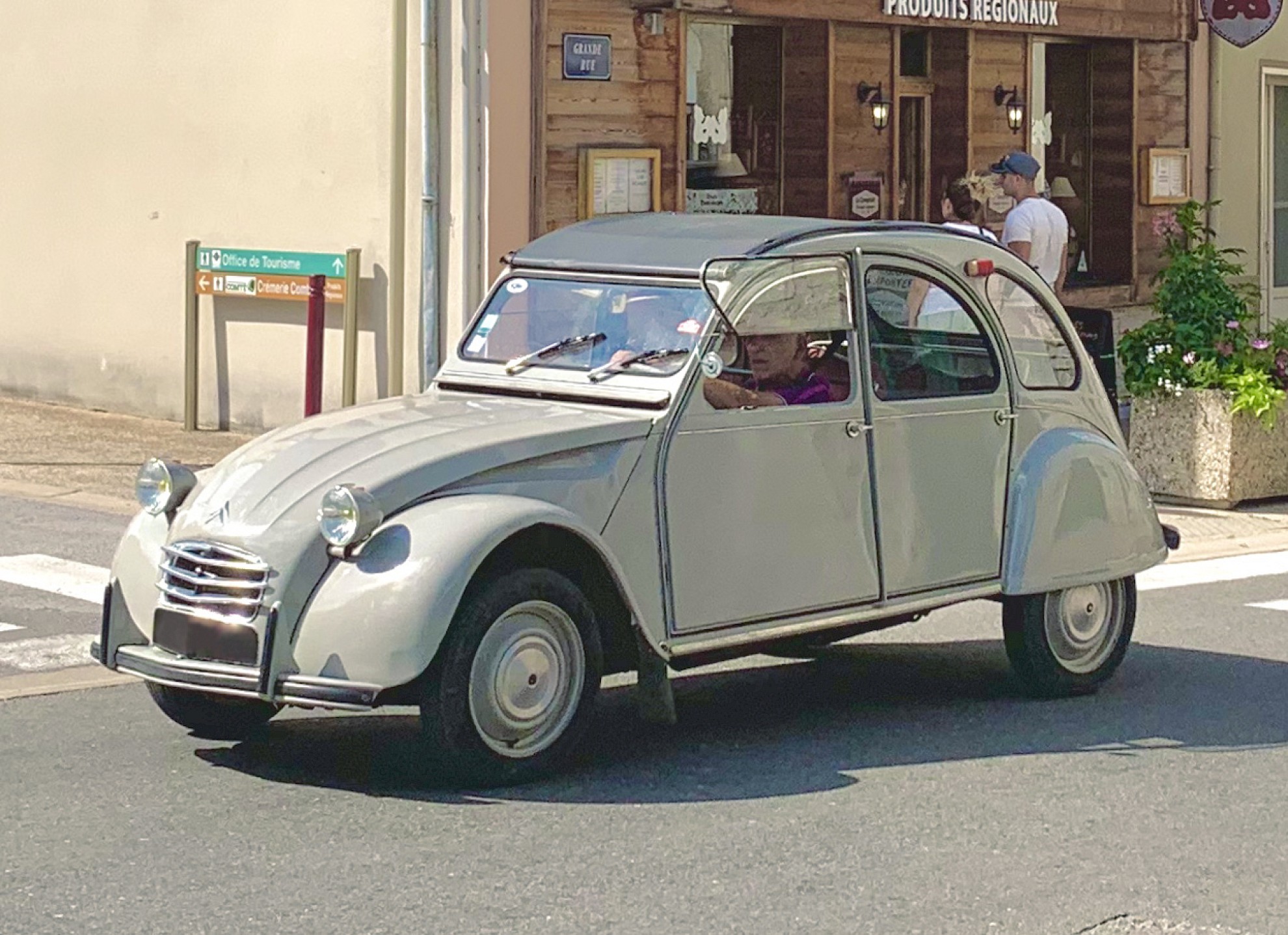
A Citroën 2CV from the 1960s. Its distinctive silhouette and ingenious design helped make it one of France's most popular cars. Photo: Rundvald / Wikimedia Commons — CC BY-SA 4.0.

The car that became part of the family
For generations of French motorists, the 2CV was much more than a convenient way of getting about.
In a 2018 interview, Marie's recollections were published by the French website Passionnément Citroën.
She remembers her family's red 2CV from the early 1980s and the journeys they made from Paris to visit grandparents in Clermont-Ferrand or take holidays in the Landes. With no radio, the family brought a portable cassette player. Luggage was squeezed into every available space. On one memorable journey, they suffered a puncture. Unfortunately, the spare wheel was buried beneath everything they had packed. The entire contents of the boot had to be unloaded before they could reach it. Thereafter, the family made sure the spare wheel travelled at the front of the car.
Marie later inherited the 2CV when she passed her driving test and continued using it throughout her university years. Eventually, the ageing Citroën failed its roadworthiness test and was taken off the road. Rather than part with it, she and her future husband embarked on a restoration. It took more than a year of weekends, with help from his father, to bring the car back to life. And when the time came to repaint it, Marie chose Mimosa Yellow – the colour her mother had wanted when the family originally bought the car. The restored 2CV subsequently became Marie's wedding car. She still owned it when she shared her story in 2018.
It is difficult to imagine a better illustration of how thoroughly the little Citroën became woven into French family life.
An unlikely admirer in Japan
The 2CV's charm travelled far beyond France, attracting admirers from quite unexpected places.
One of its most devoted owners was Japanese filmmaker Hayao Miyazaki, co-founder of Studio Ghibli and director of Spirited Away and My Neighbour Totoro. Miyazaki originally bought a car to help transport his young child to nursery.
For decades, the director drove one to work. He even called his personal studio Nibariki, meaning Two Horsepower in Japanese.
In an interview published by Toyota, Miyazaki cheerfully acknowledged the car's shortcomings. The indicators didn't cancel automatically, and the summer heat could make driving decidedly uncomfortable. But he appreciated the 2CV precisely because it demanded more involvement from its driver. Its simplicity appealed to someone who was increasingly surrounded by technology.
His family's beloved grey 2CV was placed on display at Ghibli Park in Japan in January 2025, accompanied by an exhibition telling the story of his attachment to the car.
A French automobile originally conceived for rural families had become the treasured companion of one of the world's most celebrated filmmakers.
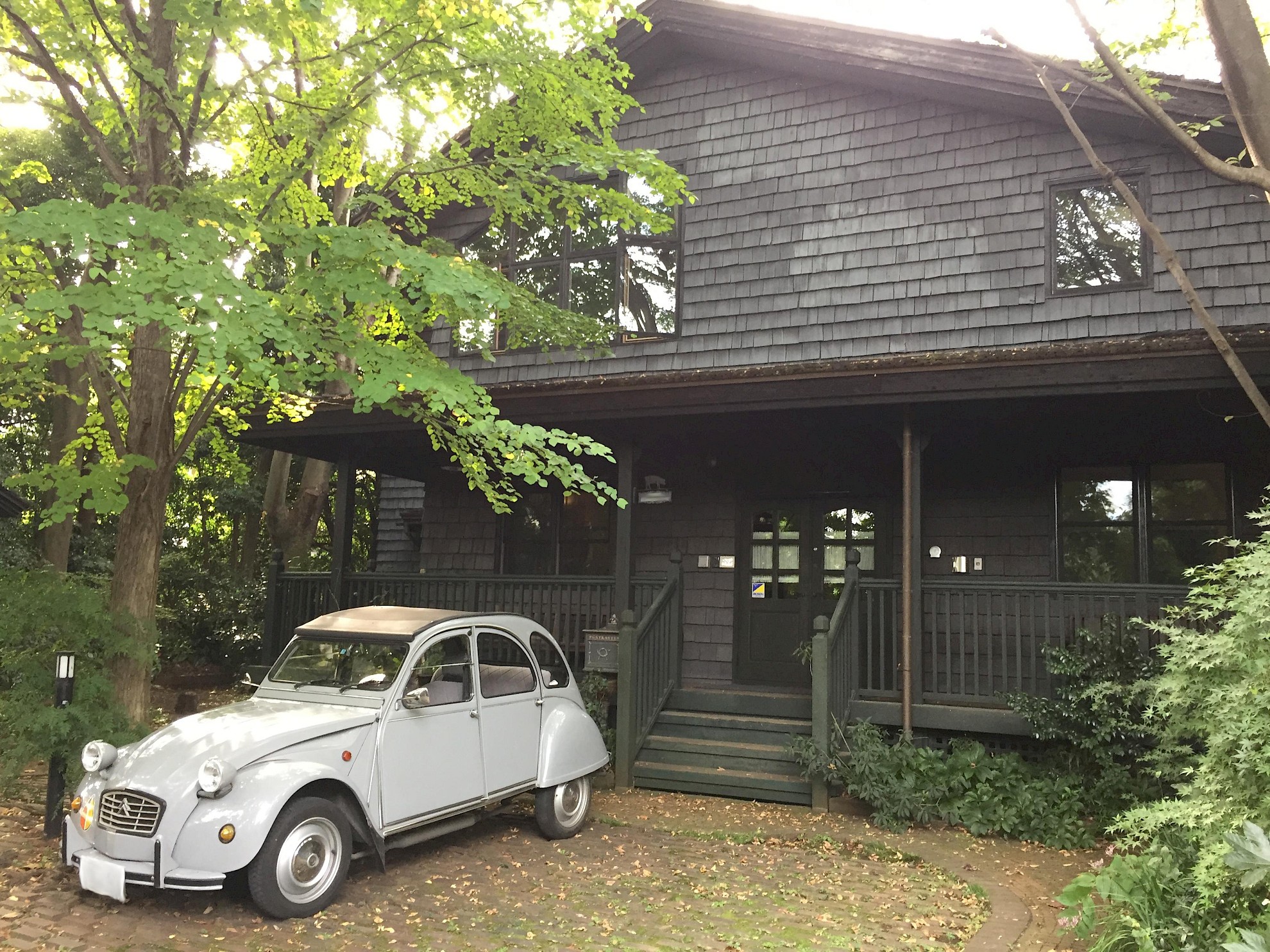
Hayao Miyazaki’s Citroën 2CV outside his Nibariki studio in Japan. His faithful motoring companion for several decades. Photo: Qck24 / Wikimedia Commons – CC BY-SA 4.0
1976: The 2CV takes on a new personality
By the mid-1970s, the 2CV had long since established itself as a French motoring institution. But its simple, familiar shape offered an unexpected opportunity for something more playful. In April 1976, Citroën introduced the 2CV Spot, designed by Serge Gevin. Its striking combination of Ténéré Orange and Meije White, striped canvas roof and colourful interior details gave the familiar 2CV a distinctly cheerful personality. Just 1,800 examples were available for the French market. They sold out within days.
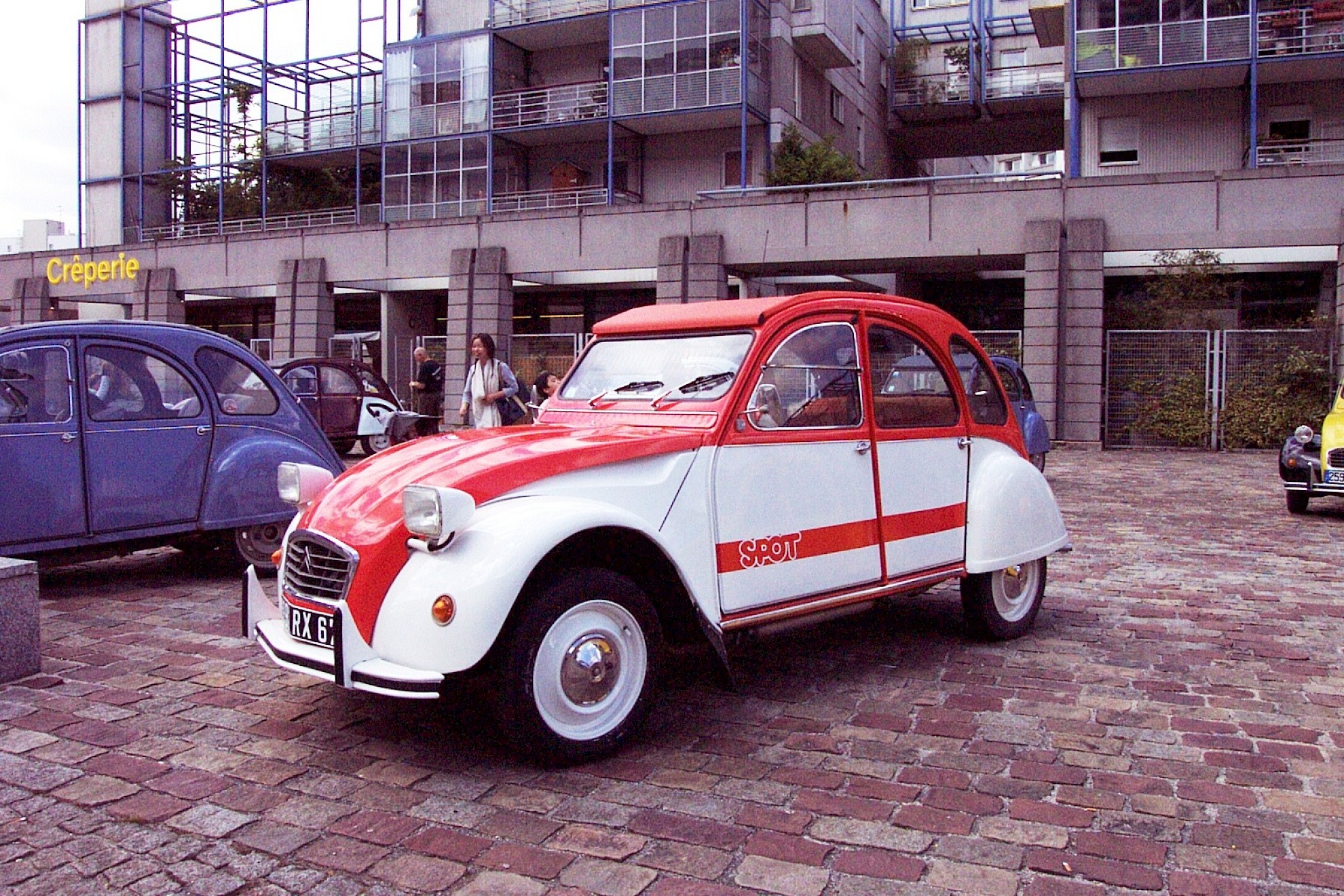
With its two-tone paintwork and decorative stripes, the 2CV Spot brings a playful touch to the much-loved little Citroën. Photo: Ruizo / Wikimedia Commons — CC BY-SA 3.0.

The Spot was the beginning of a succession of distinctive limited editions, including the Charleston, Dolly, France 3 and Cocorico. Fifty years later, Époqu'Auto 2026 celebrated this colourful chapter of Citroën history with a display dedicated to the special editions, including one particularly unusual version: the 2CV 007.
1981: The most unikely James Bond car
Few people could have imagined that the humble 2CV would go on to become the star of a James Bond car chase in one of the world’s biggest movie franchises.
In For Your Eyes Only, released in 1981, Roger Moore's Bond found himself without his usual sophisticated machinery. Following the destruction of his Lotus Esprit, he escaped his pursuers in a yellow 2CV belonging to Melina Havelock, played by French actress Carole Bouquet.
It is everything a James Bond car isn't supposed to be. No powerful sports-car engine, no elaborate gadgets and certainly no suggestion of luxury. Instead, the little Citroën hurtles along narrow roads, tumbles through olive groves and somehow keeps going, despite the punishment it receives. The spectacular chase was coordinated by French stunt specialist Rémy Julienne. To make the action possible, several of the cars used for filming were modified with more powerful four-cylinder engines from the Citroën GS. The result was one of the most entertaining sequences in the series, proving that personality could be every bit as memorable as performance.
Citroën celebrated the film with a special 2CV 007 edition, complete with yellow paintwork, 007 graphics and imitation bullet holes.
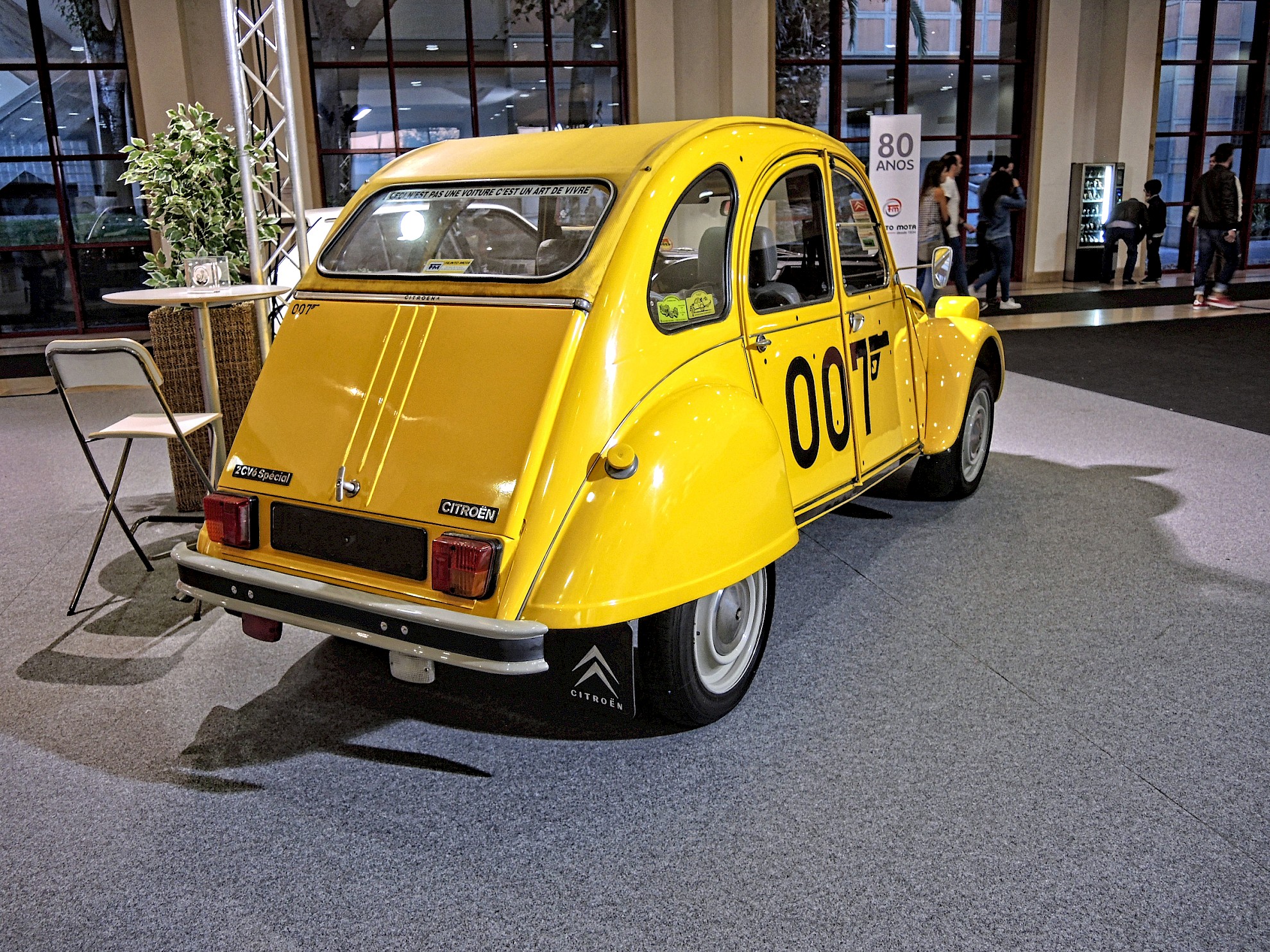
A yellow Citroën 2CV displaying the distinctive 007 graphics inspired by For Your Eyes Only (1981). Photographed at the AutoClássico classic-car exhibition in Porto, Portugal, in October 2016. Photo: Dario Alvarez / Wikimedia Commons — CC BY 2.0.

That celebratory model was among the special editions featured in the programme for the anniversary exhibition at Lyon.
Keeping the memories alive
The 2CV's production finally ended in 1990, after more than five million cars and light commercial derivatives had been built. But its popularity among enthusiasts never disappeared. For French YouTuber Chris, who explores the stories behind famous vehicles and builds their scale reproductions, the 2CV remains a very personal pleasure.
In his video L'Histoire derrière la Maquette, he recalls driving his 2CV along the country roads near his home and enjoying outings with his children. One of his favourite memories is arriving to collect them from school in the little Citroën and laughing at their reactions. It's a delightful reminder that, even decades after its introduction, the 2CV continues to create the kind of family memories that made it so special in the first place.
Chris also enjoys rediscovering the car through modelmaking. Examining Agora Models' large-scale 2CV, he draws attention to the faithful proportions, the engine, the interior and the smaller mechanical details that are so easy to overlook on the real car. For him, building a model is about more than assembling components. Understanding the history behind the vehicle makes the experience all the more satisfying.
On show in the heart of London's West End
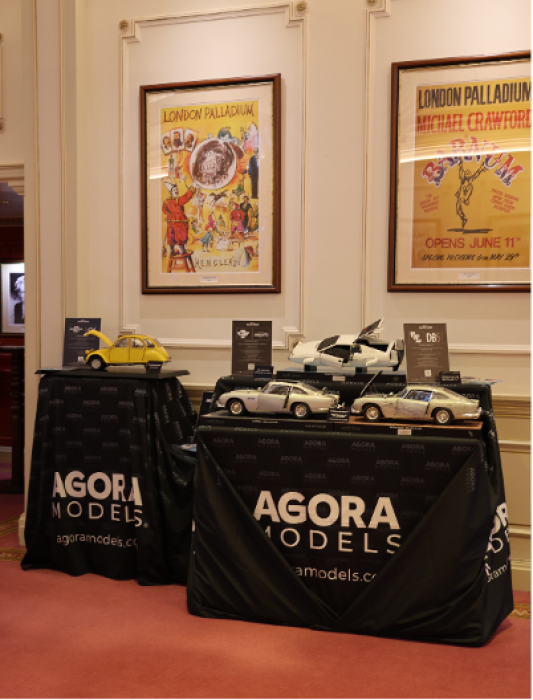
The 2CV's ability to attract attention was evident at its first public appearance as an Agora Models 1:8 scale reproduction. Displayed at a gathering of James Bond enthusiasts at London's Hippodrome Casino on 31 October 2026, and at the London Palladium the following day, the little yellow Citroën proved an unexpected attraction. Throughout the events, fans were drawn to the model, taking time to admire the details of a car that still holds a special place in the Bond story.
Even in a world of Aston Martins and Lotus Esprits, the humble 2CV can still steal the show.
A little car with an extraordinary legacy
The affection surrounding the 2CV is difficult to explain through conventional automotive achievements. It was never the fastest car, the most luxurious or the most sophisticated. Its appeal lay in qualities that are harder to measure: simplicity, character, practicality and the memories it helped create. For Marie, it became a treasured family heirloom. For Hayao Miyazaki, a faithful companion on his daily journey to work. For Chris, it remains a source of pleasure and happy memories with his children.
And for millions of filmgoers, it will always be the unlikely yellow hero of one of James Bond's most entertaining adventures.
Perhaps that is why the 2CV continues to inspire such affection.
It was designed to be a car that ordinary people could afford. It became a car that extraordinary numbers of people loved.
Discover Agora Models' Citroën 2CV at 1:8 scale. This detailed model can be assembled in its classic French road-going appearance or with the distinctive damage from the famous James Bond movie chase.